You turn on the kitchen tap and pour a glass, brush your teeth upstairs, run the washing machine downstairs, and never really think about what’s traveling through the pipes. Then one day you notice sediment in the showerhead, or a faint chlorine smell in the baby’s bathwater, and suddenly the whole-house setup stops being invisible. Picking the right house water filtration systems means matching what your water actually carries with the right mix of cartridges, micron ratings, and stage design. The nine options below cover the most common scenarios, from whole-home sediment stages to portable ceramic filters for emergencies.
The Choices Worth Comparing

Express Water FLTSETALK105Q RO Alkaline Filter Set

Express Water FLTSETALKUV1110Q RO Alkaline & UV Filter Set

iSpring F6WGB32B 3-Stage Whole House Water Filter

Hydronix SDC-45-1005 Polypropylene Sediment Cartridge

GE FXHTC Whole House Water Filter Replacement

Express Water 2-Pack Whole House Sediment Filter
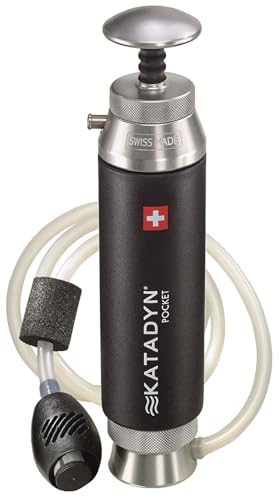
Katadyn Pocket Ceramic Hand Pump Water Filter

Campbell 1SS 5 Micron Sediment Cartridge 2-Pack

Culligan CW5-BBS Whole House Filter Cartridge 3-Pack
The Picks, Examined More Closely
This Express Water replacement set is built for shoppers who already run (or plan to run) a reverse osmosis system under the sink and want a coordinated cartridge refresh rather than piecing stages together from different brands. The set centers on an alkaline remineralization stage, which sits at the finish line of the RO process to put a small amount of healthy minerals back into the water that pure osmosis strips away.
For households drinking primarily from an under-sink RO tap, the appeal is the consistency of matching cartridges that flow together without pressure drops. You may find, depending on your incoming water hardness, that the alkaline stage needs replacement more often than the other media.
A Strong Showing
- Coordinated cartridges sized to work together, simplifying annual maintenance
- Alkaline stage helps restore a more pleasant mineral taste after RO stripping
- Drop-in design for standard RO housings reduces installation guesswork
- Supports a meaningful upgrade path if you later add a UV stage like the FLTSETALKUV1110Q set below
Worth Noting
- Only fits Express Water RO systems, so owners of other brands need a different set
- The alkaline stage has a shorter effective life in very hard-water regions
Who Will Love This
Existing Express Water RO owners who want a matched, plug-and-play annual filter refresh without researching each stage separately.
Consider Something Else When
The Express Water FLTSETALKUV1110Q RO Alkaline & UV Filter Set is a better match if you also want a UV stage for microbial concerns.
Step up from the alkaline-only set and you land here: the same RO replacement lineup with a UV stage added. UV, which stands for ultraviolet, passes water through a light chamber that disrupts the DNA of bacteria and viruses, addressing a class of concern that carbon and sediment stages alone cannot touch. For homes on well water or older municipal lines, that extra stage matters.
The UV lamp has its own replacement cycle independent of the carbon and sediment cartridges, so factor in that recurring step when planning annual maintenance. For households near agricultural runoff or with plumbing that has sat idle during long vacations, the UV stage is the meaningful upgrade over a plain alkaline set.
Standout Benefits
- UV stage addresses microbial concerns that carbon alone misses
- Alkaline finish restores minerals stripped by the RO membrane
- Coordinated cartridges cut the guesswork from a multi-stage refresh
Trade Offs
- UV lamp adds an annual replacement step beyond the standard cartridges
- Requires a powered outlet near the RO manifold for the UV chamber
Best Match For
Express Water RO owners on well water or aging municipal plumbing who want microbial coverage without abandoning the convenience of a matched replacement set.
Swap It Out When
The Express Water FLTSETALK105Q RO Alkaline Filter Set is the simpler call for city-water households without microbial worries.
The iSpring F6WGB32B shifts the conversation from under-sink to whole-house, treating every tap, shower, and appliance in the home. A 3-stage configuration (sediment, carbon, and a polishing stage) targets the chlorine taste and odor that drives most homeowners to research filtration in the first place, while capturing the rust and sediment that stain fixtures over the water.
For larger households where every bathroom and laundry run pulls from the same supply, a single point-of-entry system simplifies the maintenance calendar compared with scattered under-sink units. The standard 2-pack format suits homes with higher daily consumption, and you may find the higher flow rate a clear improvement over smaller point-of-use cartridges during simultaneous shower and laundry use.
Good Reasons To Consider
- Three stages cover sediment, chlorine, and finer polishing in one manifold
- Whole-home coverage means filtered water at every tap
- Two-pack format supports higher-volume households
- Standard filter sizing keeps replacement cartridges easy to source
Small Caveats
- Whole-house installation may require a plumber if you are not comfortable with main-line plumbing
- Carbon stages in the system need timely replacement to avoid becoming exhausted
Feature Snapshot
Made For
Mid-to-large households on municipal water who want a single point-of-entry system instead of scattered under-sink filters.
Look Elsewhere When
The Hydronix SDC-45-1005 sediment cartridge suits shoppers who only need a sediment stage for an existing manifold.
Where the iSpring above is a complete system, the Hydronix SDC-45-1005 is a single-purpose workhorse cartridge: pure 100% polypropylene fibers wound into a depth cartridge that traps sediment down to 5 microns. The “micron” rating tells you the size of particles the cartridge catches, and 5 microns sits in the range that visibly reduces cloudy water and protects downstream carbon stages from clogging prematurely.
NSF/ANSI Standard 42 certification covers material safety and certain aesthetic contaminant claims, giving shoppers a documented baseline rather than a marketing claim alone. The 4.5″ x 10″ housing size is a common standard, which means it slots into most existing manifolds without an adapter hunt. For sediment-heavy municipal supplies, the high dirt-holding capacity extends the replacement interval compared to thinner paper cartridges.
What It Does Well
- NSF/ANSI Standard 42 certified for documented material safety
- 5 micron rating catches visible sediment while keeping flow rate usable
- Standard 4.5″ x 10″ size fits most common sediment housings
- Pure polypropylene construction resists chemical breakdown over time
Areas To Watch
- Handles sediment only, so it must be paired with a carbon stage for chlorine taste
- Higher sediment loads shorten the cartridge life below the rated interval
Quick Facts
Who Should Grab It
Shoppers running an existing whole-house manifold on sediment-heavy municipal water who want a certified, standard-size replacement stage.
A Better Fit Elsewhere
The Culligan CW5-BBS is a stronger pick for very high sediment loads where the longer rated life matters more than independent certification.
The GE FXHTC is the replacement cartridge for homeowners who already own a GE GXWH40L or GXWH35F whole-house system. Sold as a 4-pack, it covers a full year of scheduled swaps if you follow the three-month rotation, leaving one cartridge as a backup. NSF/ANSI certification covers the listed contaminant claims, including chlorine, sediment, and rust reduction.
For owners of those specific GE systems, this is the path of least resistance: a manufacturer-fit cartridge that drops in without adapters and that meets the same certification standard the original system was rated for. If your manifold is a different brand entirely, skip this one and look at the universal-fit picks below.
The Good Stuff
- Drop-in fit for GE GXWH40L and GXWH35F whole-house systems
- 4-pack covers roughly a year of three-month swaps
- NSF/ANSI certified reduction of chlorine, sediment, and rust
Points To Keep In Mind
- Not a universal cartridge, so owners of other manifolds need a different model
- Recommended every three months, which means planning ahead for shipping lead times
The Right Fit
Existing GE GXWH40L or GXWH35F owners who want manufacturer-fit replacements that preserve their system’s certification.
Reach For A Different Pick When
The Hydronix SDC-45-1005 is the better pick for shoppers on a non-GE manifold needing a universal-fit sediment cartridge.
The Express Water 2-Pack sediment cartridge slots into the same ecosystem as the RO sets above, but targets the whole-house manifold instead of the under-sink unit. A 5 micron rating catches the visible sediment that would otherwise reach washing machines, water heaters, and faucet aerators, where it builds up as scale and staining over the water.
As a pre-filter ahead of carbon stages, this cartridge does the dirty work so the carbon can focus on chlorine and taste. The 2-pack format keeps a backup on hand for the next swap, and the cartridges are designed for quick replacement rather than a wrench-and-goop job. For homes where the first stage clogs faster than the rated interval, the spare buys you breathing room.
What Works In Its Favor
- Whole-house 5 micron sediment reduction for every tap in the home
- Designed for quick, no-tools cartridge swaps
- 2-pack format keeps a backup ready for the next service window
- Plays well as a pre-filter ahead of carbon and polishing stages
Honest Caveats
- Sediment only, so it must be paired with a carbon stage for taste and odor
- Replacement interval shortens noticeably in areas with construction-related turbidity
Built With In Mind
Households adding or refreshing a whole-house pre-filtration stage on a busy manifold where sediment load is the primary concern.
Not Your Match When
The iSpring F6WGB32B 3-Stage Whole House Water Filter is the better pick if you want sediment, carbon, and polishing in a single coordinated system.
The Katadyn Pocket sits in a different category from every other pick on this list: a portable hand-pump filter built around a cleanable ceramic element. Micro filtration (a method that physically strains microorganisms from the water) targets bacteria and protozoa, and the ceramic element can be scrubbed and reused rather than replaced, extending field life considerably.
For backpackers, emergency kits, and off-grid cabins, the value proposition is independence from municipal treatment. The filter outputs roughly one quart per minute under hand pumping, and the long service life makes it more of a long-term tool than a consumable. It is not a whole-house solution, so consider it a complement to, not a replacement for, the manifold systems above.
Real-World Strengths
- Cleanable ceramic element extends field life and reduces replacement cost
- Micro filtration handles bacteria and protozoa from natural water sources
- Hand-pump operation needs no electricity or plumbing
- Portable form factor fits emergency kits and backpacking loads
Possible Compromises
- Not a substitute for whole-house or under-sink filtration in a fixed residence
- Hand-pumping adds effort compared to tap-based systems
Feature Rundown
Perfect Match For
Backpackers, emergency planners, and off-grid cabin owners who need a portable ceramic element independent of plumbing.
Skip It When
The iSpring F6WGB32B 3-Stage Whole House Water Filter is the smarter choice for homeowners who want whole-house coverage, not portable filtration.
The Campbell 1SS is a workhorse sediment cartridge in the standard 9-3/4 inch drop-in format, which is the most common residential sediment housing size on the market. A 5 micron rating covers the visible sediment load (dirt, sand, rust flakes) that clouds water and stains fixtures, and the 2-pack format covers two replacement cycles.
For shoppers running a basic two- or three-stage whole-house manifold on a budget, this is the kind of no-frills cartridge that does the job without premium pricing. It pairs naturally with a separate carbon stage for taste and odor, and the standard sizing means swapping the cartridge takes minutes, not a service call.
Useful Touches
- Standard 9-3/4 inch size fits the most common residential housings
- 5 micron rating catches visible sediment without choking flow
- 2-pack format covers two replacement cycles
- Drop-in design simplifies the swap, no tools or plumber required
Small Limitations
- Sediment reduction only, so chlorine taste needs a separate carbon stage
- Not independently certified like the Hydronix cartridge above
Whose Shelf It Belongs On
Budget-focused homeowners on a standard whole-house manifold who want a familiar, easy-to-source sediment cartridge without paying for premium certification.
Where Another Pick Suits Better
The Hydronix SDC-45-1005 is a stronger call if NSF/ANSI Standard 42 certification matters for your replacement decision.
The Culligan CW5-BBS closes the list as a heavy-duty Level 4 cord-wound polypropylene cartridge aimed squarely at high sediment loads. Cord-wound construction layers fine fibers in a tight spiral, increasing dirt-holding capacity beyond what a flat cartridge can manage, which translates to longer intervals between swaps.
A 5 micron rating catches everything from coarse sand down to fine silt, and the rated 16,000 gallon capacity per cartridge supports roughly four months of average household use. For homes where shorter-lived cartridges clog mid-cycle, the longer service life is the meaningful upgrade. You may find this cartridge outlasts thinner alternatives in the same housing.
Strengths Worth Knowing
- Level 4 cord-wound construction holds more sediment than flat cartridges
- 5 micron rating covers coarse sand down to fine silt
- 16,000 gallon rated capacity extends the replacement interval
- 3-pack format covers roughly a year of average household use
Trade-Offs To Consider
- Sediment only, so pair with a separate carbon stage for chlorine reduction
- Higher capacity comes with a larger physical cartridge footprint
Feature Snapshot
Best Suited To
Larger homes or properties on high-sediment well or municipal water where longer cartridge life reduces maintenance trips.
Where A Sibling Pick Shines
The Campbell 1SS cartridge is a leaner choice for shoppers on a budget who do not need the Level 4 dirt-holding capacity.
What To Weigh Before Choosing a Whole-Home Setup
The first fork in the road is point-of-entry versus point-of-use. Whole-house systems, the kind that sit on the main line where water enters the home, treat every tap, shower, and appliance at once. Under-sink units like the Express Water RO sets focus on drinking water only, which can be more efficient if your main concern is the kitchen tap. For households with skin or hair sensitivity to chlorine, the whole-house approach matters more because every shower is a long, hot, open exposure.
Micron rating is the next lever. Lower numbers catch smaller particles, but they also restrict flow and clog faster. A 5 micron sediment cartridge is the sweet spot for most homes: visible sediment removal without choking the flow during simultaneous showers and laundry. For finer filtration (chlorine, lead, volatile compounds), you need a carbon stage or RO membrane layered after the sediment pre-filter.
The third consideration is replacement cadence. Whole-house carbon cartridges typically need swapping every three to six months, and ignoring that interval lets exhausted carbon release trapped material back into the water. NSF/ANSI certification, like the Hydronix and GE cartridges above carry, gives you a documented baseline rather than a marketing claim alone, especially relevant for sediment reduction claims.
Last, factor in maintenance access. Whole-house manifolds usually sit in basements, crawl spaces, or utility rooms. Spacious access and a shut-off valve within reach make the annual swap a 15-minute job rather than a half-day project.
Key Considerations Across These Picks
Pitfalls Shoppers Hit
The most common slip is treating micron rating as a single quality number. A 1 micron cartridge catches more, but it clogs faster and reduces flow; a 25 micron cartridge flows freely but lets visible sediment through. The right answer is “right-sized for the job,” with sediment at 5 microns and finer polishing handled by carbon downstream.
Another trap is buying a universal-fit cartridge without checking the housing size. Standard residential housings come in 2.5″, 4.5″, and big-blue 10″ and 20″ formats, and a 9-3/4 inch cartridge like the Campbell 1SS will not seat in a 4.5″ housing. Measure the existing housing before ordering replacements.
Where The Extra Money Goes
Premium whole-house systems carry higher price tags for three reasons: more stages, larger capacity, and certification. A 3-stage system like the iSpring F6WGB32B adds a polishing stage beyond sediment and carbon, which improves taste noticeably. Larger housings hold more media, extending the replacement interval. NSF certification adds testing cost that the manufacturer passes along but that you can lean on for verified claims. For households with sensitive skin or specific contaminant concerns, the upgrade is meaningful; for a basic chlorine and sediment reduction job, a simpler two-stage system handles it well.
Frequently Asked Questions
How often should whole-house filter cartridges be replaced?
Sediment cartridges typically need replacement every three to six months depending on incoming water quality, while carbon cartridges last roughly six months before exhaustion becomes a concern. Following the manufacturer’s recommended interval keeps the system filtering as designed.
What is the difference between sediment and carbon filtration?
Sediment cartridges physically strain particles like sand, rust, and silt based on micron rating. Carbon cartridges use activated carbon to adsorb (a process where contaminants cling to the carbon surface) chlorine, volatile organic compounds, and taste- and odor-causing compounds. Most whole-home systems layer both stages because they handle different jobs.
Can I install a whole-house filter myself?
Drop-in cartridge replacements are homeowner-friendly and require no special tools. Installing a new manifold on the main water line typically requires plumbing experience and may need a permit depending on local code, so a plumber is the safer call for first-time whole-house installations.
Do I need a reverse osmosis system if I already have a whole-house filter?
Whole-house filtration handles sediment and chlorine, but RO addresses dissolved contaminants like lead, arsenic, and nitrates at finer levels. For households on municipal water where the primary concern is taste and odor, whole-house may be enough. For well water or known contaminant issues, adding RO at the kitchen tap is a meaningful layer of protection.
What does NSF/ANSI certification actually cover?
NSF/ANSI Standard 42 covers material safety and aesthetic contaminant reduction (chlorine, sediment, taste). NSF/ANSI Standard 53 covers health-related contaminant reduction (lead, cysts, volatile organic compounds). For shoppers who want documented claims rather than marketing language, looking for the standard number on the listing is the simplest check.
Bottom Line
The right house water filtration system depends on whether your concern is sediment, chlorine taste, dissolved contaminants, or portable filtration for emergencies. Whole-house three-stage systems like the iSpring F6WGB32B serve larger households with comprehensive coverage, while single-purpose cartridges like the Hydronix SDC-45-1005 and Campbell 1SS slot into existing manifolds at modest cost. Match the cartridge format to your housing, the micron rating to your sediment load, and the stage count to the contaminants you actually want to address.