Tap water tells two stories: what’s in it, and what you want out of it. Plenty of households want fewer contaminants, better taste, and zero hassle under the sink. Countertop and under-sink units both get there; the right one depends on your kitchen layout, filter appetite, and tolerance for installation. This roundup sorts eight solid options by what they actually do, who they fit, and where each one earns its keep.
A Fast Comparison Of The Options

DREO Reverse Osmosis Water Filter Countertop RO 112 3L

DREO Reverse Osmosis Water Filter Countertop with 2 Autofill Pitchers

DREO 7-in-1 Reverse Osmosis Replacement Filter

Waterdrop 10UB Under Sink Water Filter System

iSpring US31-NC 3-Stage Under Sink Water Filter

DREO WF511 Countertop RO Water Filter 7-Stage
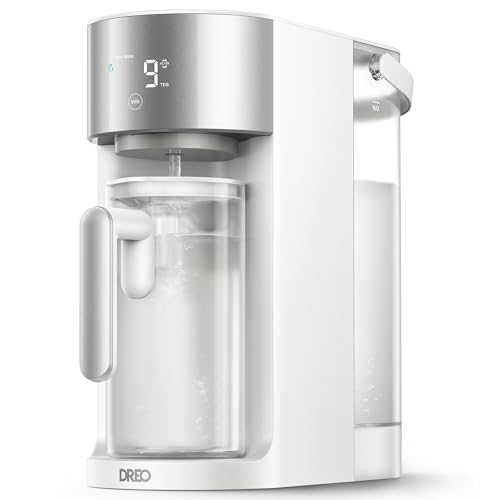
DREO RO Countertop Water Filter with Autofill

DREO WF511 Countertop RO Water Filtration System
Inside Each Recommended Option
Countertop reverse osmosis (a membrane-based process that forces water through a superfine filter to strip out dissolved contaminants) tends to live or die on convenience, and DREO’s RO 112 leans hard into the no-install side. You pour tap water in, watch the autofill pitcher do its job, and pull a glass without ever opening a cabinet door. The 3L pitcher covers a couple of refills before you have to top it off, which feels right for a household of two.
Compared with the under-sink picks later in this list, the RO 112 trades hidden installation for visible countertop real estate. The trade-off pays off for renters and anyone who’d rather not drill a new faucet hole. For most kitchens, the autofill pitcher alone saves several trips to the tap every day.
Real-World Strengths
- 3:1 pure-to-drain ratio, so each glass of clean water sends only a small amount to waste
- Built-in TDS (total dissolved solids) display shows incoming and filtered water quality in real time
- Self-cleaning cycle reduces the slimy buildup that plagues many countertop units
- No tools, no drilling, no plumber visits, just plug in and pour
- Autofill pitcher refills itself, freeing up your hands during meal prep
Things To Consider
- Sits on the counter, so you give up usable prep space
- Replacement cartridges are a recurring cost, roughly every 265 gallons of use
Key Specs
Who It Suits Best
Renters, small-kitchen dwellers, and anyone who wants strong filtration without touching the plumbing benefit most from the RO 112.
A Better Fit Elsewhere
Choose the Waterdrop 10UB Under Sink Water Filter System instead if you want the hardware tucked out of sight and don’t mind a basic faucet install.
This DREO keeps the RO 112’s no-install promise but doubles up with two autofill pitchers. One stays in the fridge for cold glasses, the other parks on the counter for cooking. That kind of redundancy matters in busy households where water constantly runs out mid-recipe. You stop playing musical chairs with a single pitcher.
The TDS readout, filter-life indicator, and self-cleaning cycle all carry over from the single-pitcher version, so daily operation feels identical once both pitchers are in rotation. For most families, the second pitcher quietly removes one of the small daily annoyances of countertop filtration.
Standout Benefits
- Two pitchers keep cold storage and cooking water flowing at the same time
- 3:1 pure-to-drain ratio holds steady, so waste water stays reasonable
- Same no-drill setup as the single-pitcher model, just slightly larger
- TDS and filter life on the front panel make cartridge timing obvious
Worth Noting
- Larger countertop footprint than the RO 112
- Pitchers take up fridge door space, which can crowd smaller fridges
Made For
Households of three or more who run through filtered water fast and want a pitcher always ready.
Consider Something Else When
Pick the DREO WF511 Countertop RO Water Filter 7-Stage if you want more filtration layers per glass and don’t need the twin-pitcher convenience.
This isn’t a system, it’s the cartridge that keeps a DREO system honest. The 7-in-1 replacement drops into the RO 112 and its siblings, refreshing the membrane and carbon layers that do the actual filtering. Owners commonly forget that the cartridge has a finite life, and skipping replacements quietly degrades taste and contaminant reduction.
It targets the same long list of contaminants as the host unit: PFAS and PFOA (a group of persistent “forever chemicals” used in nonstick coatings and water-repellent fabrics), PFOS, chlorine, and other common tap-water troublemakers. For anyone already running a DREO countertop system, keeping a spare on hand avoids the day the filter light blinks red and you’re stuck without clean water.
Benefits That Matter
- Compatible across the RO 112, 113, 114, and 115 models, simplifying spares
- Rated for 265 gallons, roughly six to twelve months for typical households
- SGS-tested performance keeps it in step with the original cartridge claims
Trade Offs
- Only useful if you already own a compatible DREO unit
- Replacement cadence depends on how much water your household actually runs through
Right Fit For
Current DREO countertop owners planning ahead on filter maintenance.
Skip It When
Choose a full countertop unit like the DREO RO 112 instead if you don’t already own a compatible DREO system.
The Waterdrop 10UB is the under-sink equivalent of a quiet neighbor. It hides the hardware in the cabinet, runs a dedicated faucet through the countertop, and pulls double duty on contaminants without making a fuss. The multistage filter tackles sediments, chlorine, and a broad range of dissolved impurities that affect both taste and odor.
Unlike the DREO countertop units earlier in this list, this one asks for some plumbing comfort. You mount the dedicated faucet, attach the supply line, and swap cartridges from below. For most renters with a friendly landlord and a willingness to use a wrench, the install takes less than an hour. The pay-off is filtered water on tap without any appliance crowding the counter.
Everyday Advantages
- Dedicated faucet keeps filtered and unfiltered water clearly separated
- Multistage filtration handles sediment, chlorine, and heavy metals in one pass
- Replacement cartridges are easy to find and simple to twist in
- Under-sink mounting frees the entire counter for cooking
Honest Caveats
- Designed for municipal cold water only, not suitable for well water or hot lines
- Requires drilling a hole for the dedicated faucet, which may bother some renters
At A Glance
Best Suited To
DIYers comfortable with basic under-sink plumbing and homeowners who want hidden filtration hardware.
Reach For A Different Pick When
Choose the DREO RO 112 instead if drilling a faucet hole isn’t an option in your rental.
Many cities quietly switched from chlorine to chloramine (a longer-lasting disinfectant made by binding chlorine to ammonia) for water treatment, and standard carbon filters don’t always handle the swap gracefully. The iSpring US31-NC was built specifically for that reality. Its catalytic carbon media (a specially treated carbon that breaks stubborn chemical bonds, not just adsorbs them) goes after chloramine, while the rest of the cartridge stack handles sediments, VOCs (volatile organic compounds like solvents and fuel residues), and chlorine residual.
Like the Waterdrop 10UB, this lives under the sink and runs through a dedicated faucet. The honest read is that its real selling point is what it pulls out, not how it looks. For households on chloramine-treated municipal water, the difference in taste and smell shows up fast.
Where It Helps
- Catalytic carbon targets chloramine, which standard carbon often misses
- Three-stage design hits sediments, VOCs, and chlorine in sequence
- Dedicated faucet keeps filtered water distinct from the regular tap
- NSF/ANSI 58 certification on the core cartridges
Points To Keep In Mind
- Requires under-sink drilling and basic plumbing work
- Cartridges need yearly replacement in most households, adding to upkeep
Feature Snapshot
Who Should Grab It
Households on chloramine-treated city water who notice off-tastes that basic filters don’t fix.
Look Elsewhere When
Choose the Waterdrop 10UB instead if chloramine isn’t a concern and you want broader heavy-metal reduction.
The WF511 steps up from the RO 112 with a full seven-stage filtration chain, including an RO membrane with a 0.0001-micron rating. In plain terms, the pore size is small enough to catch most dissolved solids, including lead, arsenic, nitrates, and fluoride. That extra stage count is the headline feature, and for households targeting PFAS (per- and polyfluoroalkyl substances, the family of “forever chemicals” that have become a hot-button water topic) it pulls more weight than the simpler countertop units earlier in this list.
It still doesn’t ask for any plumbing, which keeps it friendly to renters and tight kitchens. The trade-off is a slightly chunkier body and the recurring cartridge cost that comes with more media stages. You may find the bigger footprint harder to hide on a small counter, but the filtration depth earns the space.
Notable Upsides
- Seven filtration layers handle PFAS, lead, arsenic, and fluoride in one pass
- 0.0001-micron RO membrane is the same pore class as larger whole-home systems
- 3:1 pure-to-drain ratio keeps waste water reasonable
- Installation-free, so renters and homeowners can use it in the same kitchen
Room For Improvement
- Larger countertop footprint than the RO 112 or twin-pitcher model
- More media stages mean replacement cartridges cost more over time
Perfect Match For
Households that prioritize deeper contaminant reduction, especially PFAS and heavy metals, and want the no-install form factor.
Not Your Match When
Choose the DREO RO 112 instead if you want a smaller, lighter countertop unit and don’t need the extra filtration layers.
This DREO shares most of its DNA with the RO 112, but the listing sometimes catches shoppers searching the model without the “112” suffix. The pitch is the same: plug in, pour, drink. The autofill pitcher quietly tops itself off, so you’re not hovering over the unit every time you want a glass.
The TDS display and filter-life indicator live on the front panel, giving you at-a-glance status without an app or remote. For most people who want a hands-off countertop experience, that visibility is the feature that earns the most daily appreciation.
What Earns Its Place
- Autofill pitcher handles its own refilling while you do other things
- Front-panel TDS and filter-life readouts remove the guesswork
- Self-cleaning cycle keeps the internal lines fresh between cartridge swaps
Factors To Consider
- Sits on the counter and takes up prep space, similar to other DREO countertop units
- Cartridge replacement is the same recurring cost as the broader DREO lineup
Built With In Mind
Anyone who wants no-install, no-fuss filtration with clear front-panel feedback on water quality and filter status.
Swap It Out When
Pick the Waterdrop 10UB Under Sink Water Filter System instead if you’d rather move the hardware out of sight and don’t mind a basic faucet install.
The standard WF511 mirrors the upgraded version’s seven-stage filtration and 0.0001-micron RO membrane, but drops the “Upgraded” tag. For shoppers comparing listings, that distinction usually comes down to bundled accessories or minor cosmetic tweaks rather than core filtration performance.
Where this one fits is the solo user or small household that wants countertop convenience without paying for extras they won’t touch. For most kitchens, the body is the same workhorse in either version. You trade a small handful of accessories for a slightly easier entry point, and the daily experience stays familiar.
The Upside
- Seven filtration stages with a 0.0001-micron RO membrane handle a wide contaminant range
- 3:1 pure-to-drain ratio keeps waste water modest for an RO unit
- No plumbing, so renters and travelers can take it along if needed
Less Ideal Details
- Larger countertop footprint than simpler pitcher-style filters
- Replacement cartridges for seven-stage units cost more than basic filter replacements
The Right Fit
Solo users, couples, and small households that want deep filtration without committing to an under-sink install.
Where A Sibling Pick Shines
Choose the DREO Reverse Osmosis Water Filter Countertop with 2 Autofill Pitchers if you need multiple pitchers in rotation for a busier household.
What To Weigh Before Choosing Home Drinking Water Filtrations
Countertop Versus Under-Sink
The first fork in the road is where the unit lives. Countertop reverse osmosis systems like the DREO RO 112 and WF511 line ask for nothing more than counter space and an outlet. Under-sink models like the Waterdrop 10UB and iSpring US31-NC tuck away but require drilling a dedicated faucet hole and routing a supply line. Renters usually favor countertop; homeowners with DIY comfort can enjoy the clean look of under-sink.
Filtration Stages And What They Target
RO stands for reverse osmosis, a process that pushes water through a membrane fine enough to catch dissolved solids that carbon alone can’t reach. A unit’s stage count hints at what gets stripped along the way. Seven-stage bodies like the WF511 pull PFAS, lead, arsenic, and fluoride. Three-stage under-sink units like the iSpring US31-NC lean into chloramine and VOCs. Match the stages to your water report, not to the highest number on the box.
Maintenance And Cartridge Timing
Every unit here runs cartridges, and every cartridge has a lifespan. The DREO 7-in-1 replacement lasts about 265 gallons, while the iSpring cartridges stretch roughly a year in typical households. Plan for the recurring cost and the few minutes per swap before you commit, especially if your household runs through a lot of water.
Key Considerations Across These Picks
Pitfalls Shoppers Hit
Skipping the water-source check is a common one: under-sink units like the Waterdrop 10UB are built for municipal cold water, not well water or hot lines. Another trap is treating stage count as a proxy for quality. A seven-stage unit that misses chloramine won’t outperform a three-stage catalytic carbon filter on the right municipal supply. Confirm what your local water actually contains before chasing the deepest spec sheet.
Where The Extra Money Goes
Higher-tier countertop units like the DREO WF511 stack more media layers, which means denser contaminant reduction and a more expensive cartridge each cycle. Under-sink units like the iSpring US31-NC cost more up front but trade visible hardware for hidden operation and dedicated faucet convenience. The honest case for spending up is when your water report calls for it; otherwise, the simpler picks handle most municipal taps with room to spare.
Frequently Asked Questions
How often do replacement cartridges need swapping?
For DREO countertop units, the 7-in-1 cartridge is rated for roughly 265 gallons, which lands around six to twelve months for typical households. The iSpring US31-NC cartridges stretch to about a year in most setups.
Can these filters handle well water?
The under-sink units covered here are designed for municipal cold water sources. Well water typically needs pre-treatment for sediment and hardness before any of these RO or carbon systems, so check your water report before installing.
Do countertop reverse osmosis units waste a lot of water?
The DREO units in this list run a 3:1 pure-to-drain ratio, meaning three cups of clean water for every cup of waste. That’s noticeably more efficient than older RO designs that pushed 1:1 ratios.
Is drilling required for any of these picks?
Only the under-sink models need a dedicated faucet hole. Countertop DREO units plug in and pour, so renters can use them without modifying the kitchen.
Will filtered water taste different from tap?
Most households notice a cleaner, less chlorinated taste once a carbon stage is in the chain. Reverse osmosis units also drop mineral content, which can read as “softer” or “flatter” to some palates, depending on what you’re used to.
Closing Remarks
The right pick comes down to your kitchen, your water, and how much hardware you want to look at. Countertop units keep installation off the to-do list and still pull serious contaminants. Under-sink options disappear into the cabinet and reward anyone comfortable with a wrench. Match the unit to your real situation, not the loudest spec sheet, and the daily glass of water will quietly get better.