A good filter changes the way your kitchen feels. If you’re tired of plastic pitcher clutter, skeptical of tap taste, or renting somewhere you can’t drill into the counter, this roundup is for you. We’re covering countertop and under-sink systems, plus a regenerant that supports whole-house greensand filters. Each pick solves a slightly different problem, so skim to the scenario that matches yours.
The Choices Worth Comparing

Bluevua RO100ROPOT-Lite Countertop Reverse Osmosis Water Filter

iSpring RCC7P-BLK 5-Stage Reverse Osmosis System with Booster Pump

American Water Solutions KP65N Pro Products Pot Perm Greensand Iron Filter Regenerant

Waterdrop 10UB Under Sink Water Filter System with Dedicated Faucet

iSpring US31-NC 3-Stage Under Sink Water Filter System with Faucet

DREO Countertop Reverse Osmosis RO Water Filter with 2 Autofill Pitchers
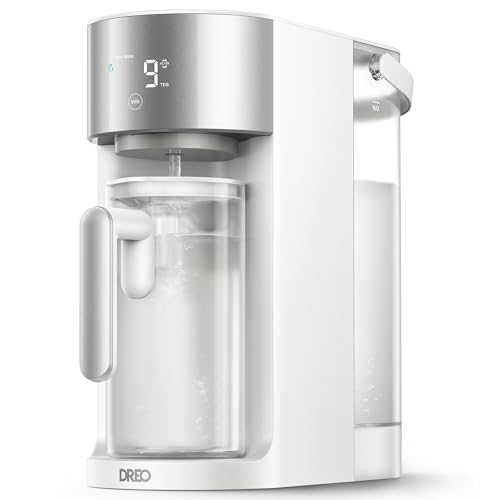
DREO Countertop Reverse Osmosis RO Water Filter with Autofill Pitcher

DREO Countertop 7-Stage RO Water Filtration System WF511 Upgraded

Bluevua RO100ROPOT Countertop Reverse Osmosis Water Filter System
Bluevua RO100ROPOT-Travel Reverse Osmosis Countertop Water Filter
The Picks, Examined More Closely
Countertop RO usually means compromise on taste, but the Bluevua RO100ROPOT-Lite sidesteps that with a borosilicate glass carafe that holds the finished water instead of plastic. You fill the top chamber, plug the unit into any outlet, and let it work. Reverse osmosis pushes tap water through a semipermeable membrane (a film with pores tiny enough to block dissolved solids), leaving most contaminants behind.
For renters, small kitchens, and anyone who moves every year or two, the “no plumbing” angle is the whole pitch. Compared to the iSpring RCC7P-BLK that follows, this one skips installation entirely and trades raw flow rate for portability.
Standout Benefits
- Glass carafe avoids plastic contact with finished water, which matters if you’re trying to reduce microplastic exposure.
- Plug-and-play setup means zero drilling, perfect for apartments or dorm rooms.
- Reverse osmosis handles dissolved solids that basic carbon filters leave behind.
- Compact footprint fits beside a coffee maker without crowding the counter.
Things To Consider
- Output is slower than a plumbed RO system, so don’t expect to fill a pasta pot in a rush.
- Replacement filters are an ongoing cost; budgeting for them upfront avoids a surprise later.
Best Suited To
City-tap renters who want RO-quality water without modifying the sink.
A Better Fit Elsewhere
Heavy-volume households that run a fridge and ice maker off filtered water should look at the iSpring RCC7P-BLK.
Where the Bluevua RO100ROPOT-Lite is portable, the iSpring RCC7P-BLK is built for permanence. It’s a five-stage under-sink RO with a booster pump (a small electric pump that pushes water through the membrane even when household pressure is low) and a 304 stainless steel black faucet that doubles as a kitchen design element. The top-mounted faucet design also simplifies installation compared to side-mounted layouts.
The system supports a fridge or ice maker connection through a separately sold kit, which is a plus if you want filtered water at the dispenser. You may find the install step heavier than any of the countertop DREO units, so plan a Saturday and a wrench.
A Favorable Mix
- Booster pump keeps performance stable in homes with lower incoming water pressure.
- 304 stainless steel faucet resists corrosion and matches modern kitchen hardware.
- Five-stage filtration trims a wider range of dissolved solids than 3-stage units.
- Optional fridge hookup expands filtered water to your refrigerator dispenser.
Points To Note
- Under-sink installation is required, so renters should check with landlords first.
- The fridge connection kit ships separately, adding to total cost.
- Annual filter changes are a routine commitment owners commonly mention.
Who It Suits Best
Homeowners with a dedicated under-sink cabinet who want fridge-ready, high-volume filtered water.
Look Elsewhere When
Anyone who can’t drill a faucet hole should skip this and grab the Bluevua RO100ROPOT-Lite instead.
This isn’t a filter, it’s a regenerant. The KP65N is potassium permanganate, an oxidizing chemical used to recharge greensand iron filters, which are whole-house tanks that pull iron and manganese out of well water. The greensand media needs periodic regeneration (a chemical refresh that restores its filtering ability), and Pot Perm is the standard recharge material for that process.
If you live on municipal water, this won’t apply to you. For households on a private well with orange-tinted stains in the sink or shower, the chemistry here actually solves the root problem rather than masking it with a carbon filter.
Practical Pluses
- Converts dissolved iron and manganese into filterable particles, addressing the source of staining.
- Standard product for greensand filter maintenance, so it slots into existing routines.
- Free-flow formula in a 76 oz. bottle for easy handling during regeneration cycles.
Honest Caveats
- Potassium permanganate is a strong oxidizer and must be stored away from children and pets.
- Only useful if you already own a greensand filter, otherwise it’s not a standalone solution.
Made For
Well-water households already running a greensand iron filter and needing to refresh its media.
Where Another Pick Suits Better
City-tap drinkers with taste or chlorine concerns should choose the iSpring US31-NC instead.
The Waterdrop 10UB sits in the sweet spot between a pitcher and a full RO system. It’s a multistage under-sink unit with its own dedicated faucet, and it’s designed specifically for municipal cold water. The replacement filter is inexpensive compared to RO membranes, which is the real story for shoppers who track ongoing cost.
You may find the “no RO” trade-off worth taking if your main complaints are chlorine taste and sediment, not dissolved solids. Compared to the iSpring US31-NC, this one focuses on everyday municipal tap concerns without aiming at chloramine reduction.
A Strong Showing
- Replacement filters stay under a modest budget, easing long-term ownership.
- Multistage setup handles sediment plus chemical contaminants in one pass.
- Under-sink housing keeps the counter clear for daily use.
- Dedicated faucet separates filtered water from the unfiltered tap.
Trade Offs
- Not designed for well water or hot water lines, so scope is narrower than the spec sheet suggests.
- It won’t strip dissolved solids the way an RO membrane will.
Right Fit For
Budget-focused city-tap households that want better taste without committing to RO-level maintenance.
Swap It Out When
Households with a chloramine-treated municipal supply should grab the iSpring US31-NC for that specific contaminant.
The US31-NC is built around one specific problem: chloramine. Many cities have moved from chlorine to chloramine (a longer-lasting disinfectant) for water treatment, and standard carbon filters don’t always touch it. The catalytic carbon media (carbon treated to react with chloramine and break it down) in this unit is tested against the chloramine reduction standard, which is a meaningful differentiator.
Two cartridges (FP15 sediment and FC15 carbon) work in sequence, and the under-sink mounting keeps the kitchen clean. It won’t reduce TDS the way the Bluevua RO100ROPOT will, but most shoppers don’t actually need that.
Benefits That Matter
- Catalytic carbon targets chloramine, which basic carbon often leaves untouched.
- Three-stage design handles sediment, chlorine, and VOCs (volatile organic compounds, like solvent traces) in one path.
- Dedicated faucet means filtered water is visually separate from tap water.
- Cartridges are widely available and simple to swap.
Small Caveats
- Not a true RO system, so dissolved minerals pass through unchanged.
- Filter housing adds depth under the sink, which can crowd shallow cabinets.
Perfect Match For
Municipal customers on chloramine-treated lines who notice a chemical taste in their tap water.
Another Choice May Suit
Anyone chasing the lowest possible TDS should pivot to the DREO WF511 countertop unit.
The DREO with two pitchers solves a real household pain point: a single filtered pitcher means one person camps out at the dispenser while the other waits. With two, you rotate. The system runs on a 3:1 pure-to-drain ratio (three cups of clean water for every cup of wastewater), which is more efficient than older RO designs that wasted four or five cups per cup of product.
Setup is genuinely install-free: plug into an outlet, flush, and you’re drinking. The display shows TDS (total dissolved solids, a measure of how many minerals and contaminants remain in the water) in real time, which is oddly satisfying for anyone who likes data. Compared to the Bluevua RO100ROPOT-Lite, this one trades the glass carafe for plastic pitchers but adds live monitoring.
The Upside
- Two pitchers mean one can chill in the fridge while the other refills.
- 3:1 drain ratio trims water waste compared to classic RO designs.
- Live TDS readout takes the guesswork out of filter replacement timing.
- No tools, no drilling, no plumber required.
Worth Bearing In Mind
- Pitchers are plastic, not glass, so the taste and microplastic concerns differ from the Bluevua carafe approach.
- Counter footprint is bigger than a single-pitcher unit.
Who Should Grab It
Busy families and shared kitchens where one filtered pitcher never feels like enough.
Reach For A Different Pick When
Solo drinkers or couples should consider the single-pitcher DREO listed next.
The single-pitcher version of the DREO countertop line keeps what works and trims the rest. Same 3:1 pure-to-drain ratio, same TDS display, same install-free setup, just one autofill pitcher instead of two. For solo users or couples, that single pitcher cycles fast enough to keep drinks and coffee topped up without an extra vessel sitting on the counter.
It also opens up counter space the two-pitcher unit eats. If you’ve been eyeing the dual-pitcher model but don’t actually need both, this is the more honest fit for daily routine.
Noteworthy Benefits
- Smaller footprint leaves room for coffee gear or a knife block beside it.
- 3:1 drain ratio keeps wastewater low for an RO system.
- TDS monitor doubles as a filter-life reminder.
- Setup takes minutes, not hours.
Possible Compromises
- One pitcher means the fridge and the dispenser share the same vessel.
- Plastic pitcher rather than glass, a trade-off echoed across most countertop RO units.
Whose Shelf It Belongs On
One- or two-person households wanting low-effort filtered water on demand.
Where A Sibling Pick Shines
Families that constantly run out of filtered water should jump back to the DREO with 2 pitchers.
The WF511 trades simplicity for depth. Seven filtration stages, anchored by a 0.0001 micron RO membrane (the membrane’s pore size is so small it blocks most dissolved contaminants), put it among the more thorough countertop options on this list. For shoppers who want maximum reduction without committing to an under-sink install, this is the most ambitious countertop pick.
It’s still install-free, which keeps it competitive with the lighter DREO models above. The honest read is that seven stages add filter changes and complexity that simpler units skip, so the trade-off is real for anyone who hates maintenance.
Everyday Perks
- Seven-stage filtration covers a wider contaminant range than 3- or 4-stage countertop units.
- 0.0001 micron membrane catches dissolved solids RO is known for.
- Countertop form factor, no drilling required.
- 3:1 drain ratio stays efficient despite the deeper filtration chain.
Less Ideal Details
- More stages means more filter replacements over time, so budget for ongoing costs.
- Bulkier housing than the single-pitcher DREO, so counter real estate matters.
Who Will Love This
Filtration enthusiasts who want the deepest countertop reduction without plumbing a system in.
Consider Something Else When
Minimalists who just want better-tasting water should pick the simpler DREO single-pitcher unit instead.
The original RO100ROPOT is the formula the Lite version is built from. You get the same borosilicate glass carafe and countertop RO setup, just without the “Lite” trim. For shoppers who want a known quantity rather than the newest variant, this is the safer choice, since the design has been on the market longer and replacement parts are easier to find.
Compared to the Lite, the differences are subtle rather than dramatic. If you don’t care about the trim distinction and just want the classic Bluevua glass-carafe experience, this is the unit to anchor on.
Notable Gains
- Borosilicate glass carafe avoids plastic contact with finished water.
- Countertop RO without plumbing makes it renter-friendly.
- Established design with widely available replacement filters.
- Compact enough to sit beside a kettle or coffee maker.
Trade-Offs To Consider
- Slower output than plumbed RO, so don’t expect rapid kettle fills.
- Filter replacement is an annual recurring cost.
Built With In Mind
Anyone who wants the proven Bluevua glass-carafe countertop RO without chasing the newest variant.
Skip It When
High-volume drinkers should look at the iSpring RCC7P-BLK under-sink system for better flow.
The Travel version of the RO100ROPOT adds a 5-in-1 filter and a UV light stage, which uses ultraviolet light to neutralize bacteria and viruses the membrane might miss. It’s still a countertop unit, but the UV polish makes it a smarter pick for RVs, vacation rentals, or anywhere the water source is questionable. The same 0.0001 micron membrane anchors the system.
Six stages, glass carafe, no install. The trade-off is that it’s heavier and pricier than the standard Bluevua countertop model, so it really pays off when you actually move around.
The Practical Payoff
- UV stage adds a sanitation layer beyond what most countertop RO offers.
- Six stages address contaminants the membrane alone might leave behind.
- Glass carafe continues the brand’s plastic-avoidance approach.
- Portable enough for short-term rentals or RV trips.
Some Limits To Know
- Heavier than the home-only Bluevua models, which matters if you’re hauling it often.
- Higher upfront cost that only earns its keep when you actually travel with it.
The Right Fit
Frequent movers, RV owners, and short-term rental residents who want RO plus UV in one package.
Where Another Pick Suits Better
Stationary homeowners should stick with the standard Bluevua RO100ROPOT and save the UV premium.
What To Weigh Before Choosing Countertop Water Filtrations
Filtration type matters more than brand recognition. Reverse osmosis (RO) pushes water through a membrane to remove dissolved solids like lead and arsenic, while carbon filters primarily handle chlorine, sediment, and taste. If your main complaint is taste and odor, a carbon-based system like the Waterdrop 10UB or iSpring US31-NC is enough. For broader contaminant reduction, RO is the more thorough path.
Contaminant profile of your water shapes the right choice. Municipal customers should check whether their utility uses chlorine or chloramine, since catalytic carbon is the difference between chloramine actually being reduced or just passing through. Well-water households with iron staining need a different solution entirely, like the KP65N regenerant paired with a greensand tank.
Form factor is a lifestyle question. Countertop units plug into any outlet and move with you, but they fill pitchers slowly. Under-sink systems deliver higher volume but require drilling and landlord approval in rentals. Pure-to-drain ratio also matters for RO buyers, since older 1:4 systems waste noticeably more water than modern 3:1 designs like the DREO line.
Maintenance and filter cost are the long game. Every system needs periodic filter changes, and RO membranes are typically more expensive than carbon cartridges. Check the cost and availability of replacement filters before committing, especially if the unit uses a proprietary cartridge.
Things Worth Knowing Before You Click
Pitfalls Shoppers Hit
Choosing by brand familiarity rather than water profile is the most common stumble. The most expensive unit on the list won’t help if it targets contaminants that aren’t actually in your water. Start with a free utility report or a basic mail-in test before picking. Skipping filter-replacement budgeting is the next mistake, since a forgotten filter turns any system into a breeding ground for bacteria.
Where The Extra Money Goes
Premium pricing in this category buys deeper filtration, better materials like 304 stainless steel faucets, and additional stages like UV polishing. The iSpring RCC7P-BLK earns its premium through booster-pump stability and fridge-ready output. The DREO WF511 earns it through seven-stage depth. Whether that depth matters depends entirely on what’s in your tap and how much you value the extra reassurance.
Frequently Asked Questions
Do countertop water filters actually work?
Yes, the better ones on this list use the same reverse osmosis membranes found in under-sink units. The difference is throughput: countertop models fill pitchers rather than feeding a dedicated faucet line at full pressure.
How often do filters need changing?
Most carbon cartridges last six to twelve months depending on use, while RO membranes often run one to two years. Real-time TDS monitors on DREO models give a clear replacement signal.
Can countertop RO remove fluoride?
Reverse osmosis membranes reduce fluoride along with other dissolved solids. Basic carbon filters generally do not, which is the core trade-off between the Waterdrop 10UB and the RO units on this list.
Are glass carafes worth the premium over plastic?
For taste-sensitive drinkers or anyone trying to reduce plastic contact, yes. Borosilicate glass is also less likely to hold odors than plastic pitchers sitting out between fills.
Is installation really install-free?
For the countertop units on this list, yes. Plug into a standard outlet, run the initial flush cycle, and the system is ready. The under-sink options, like the iSpring RCC7P-BLK, do require drilling and basic plumbing work.
The Takeaway
The best pick depends on your water, your space, and your tolerance for maintenance. Renters and small kitchens tend to land on the Bluevua or DREO countertop models. Homeowners with bigger demand and a willing drill lean toward the iSpring RCC7P-BLK. Match the system to your actual water profile and the rest tends to fall into place.