Switching to alkaline-filtered water usually starts with a simple frustration. Tap water tastes flat, leaves residue in the kettle, and the fridge door feels like the only practical option for something palatable. The right under-sink system solves all of it quietly, and you stop thinking about bottled water entirely. This guide walks through ten setups that balance pH adjustment, mineral retention, waste, and installation complexity, so you can pick one that matches your kitchen and your water goals.
The Lineup, Simplified
PickWhy We Picked ItBest ForAction

Mineral-Rich RO Performance
Home Master TMAFC-ERP Artesian Full Contact Reverse Osmosis System
Two-pass remineralization
Mineral-balanced RO fans
No-Waste Simplicity
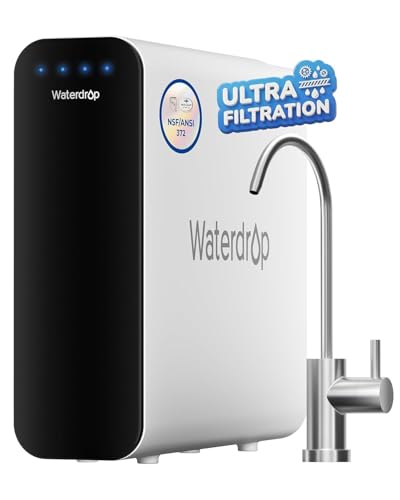
Waterdrop TSU 0.01 Micron Ultra Filtration Under Sink Filter
No drain, no tank
Renters and minimal setups

Everyday Mineral RO
Waterdrop G5P700A Alkaline Mineral RO Water Filter, 700 GPD
Fast 700 GPD flow
Large households

Dual-Outlet Versatility
Waterdrop G5P700A-PRO Alkaline Mineral pH+ RO System, 700 GPD
Two faucets from one unit
Kitchens feeding appliances

8-Layer Filtration Simplicity
Waterdrop TSA 8 Layer Under Sink Water Filter System
Compact multi-stage setup
Compact under-sink spaces

Dedicated Faucet Option
Waterdrop TSB 8 Layer Under Sink Water Filter System
All-in-one install kit
First-time installers
Stainless Steel Durability
Waterdrop TST-UF 0.01μm Ultra-Filtration Under Sink Filter
No-drill install, steel body
Renters wanting permanence

Smaller-Household Flow
Waterdrop G5P500A Alkaline Mineral RO Water Filter, 500 GPD
Right-sized 500 GPD
Couples and small families

High-Output Mineralizer
VIOMI Master M1 1000 GPD Alkaline Mineralized pH+ RO System
1000 GPD alkaline output
Heavy daily demand

Simple 6-Stage RO
VIVA21 Reverse Osmosis System (6-Stage Alkaline)
Straightforward alkaline flow
Set-and-forget households
Why These Options Stand Out
The Home Master TMAFC-ERP sits at the heavier end of the under-sink category, and that weight is the point. It uses a multi-stage reverse osmosis (RO) setup, which forces water through a semi-permeable membrane to strip out dissolved solids, then routes it through a remineralization stage twice. Reverse osmosis is the part that catches contaminants; the alkaline stage is what makes the result taste like spring water rather than flat deionized water.
Where cheaper picks in this list rely on a single mineral pass, this one pushes water through a calcium and magnesium stage a second time. That double pass is what keeps the pH up consistently and gives the water a slightly fuller mouthfeel. In our view, that justifies the larger under-sink footprint for anyone who genuinely wants mineral-balanced RO without chasing after pitchers or countertop gadgets.
A Few Strong Suits
- ✓Two-pass remineralization keeps pH and mineral content stable batch after batch.
- ✓Fast fill rate (the published 4.5-second fill speed is genuinely useful when filling large pots or kettles).
- ✓1:1 waste ratio, which is unusually efficient for a traditional tank-based RO system.
- ✓8.5-inch catalytic carbon block targets chlorine and chloramine byproducts more thoroughly than standard carbon.
- ✓5-year limited parts coverage adds long-term ownership confidence.
Things To Consider
- •Still uses RO with a tank, so it takes up noticeably more under-sink space than the Waterdrop TSU picks reviewed below.
- •Filter changes require shutting off the tank and may take longer than a simple twist-out cartridge.
Who Will Love This
Homeowners who want mineral-rich RO water daily and have the cabinet depth for a traditional RO tank setup.
Where Another Pick Suits Better
Renters or anyone with minimal cabinet space will likely prefer the Waterdrop TSU’s no-tank, no-drain simplicity instead.
Check on Amazon
The Waterdrop TSU takes a different approach than the Home Master above. Instead of running water through a reverse osmosis membrane that strips nearly everything out, it uses 0.01-micron ultrafiltration, a membrane pore size small enough to block most bacteria and sediment while leaving minerals untouched. The result is filtered water that keeps calcium and magnesium in the glass.
It also generates no wastewater, which is one of the bigger environmental gripes with traditional RO. You will need to drill a hole for the dedicated faucet, and the unit is designed for municipal cold-water lines, not well water. For city-dwelling renters, that trade-off lands well: more minerals, less wasted water, faster install.
The Upside
- ✓No drain line and no wastewater, so it fits anywhere there’s a cold-water supply.
- ✓Retains beneficial minerals better than RO, which keeps natural water character.
- ✓Targets 30+ substances per the manufacturer’s published reduction claims.
Worth Noting
- •Requires a drilled hole in the countertop or sink for the dedicated faucet.
- •Not suitable for well water or hot-water lines, limiting use cases.
- •Does not reduce TDS (total dissolved solids), so hardness ions pass through.
Made For
Renters on municipal water who want simpler installation than a tank-based RO allows, and prefer not to lose minerals.
Skip It When
You specifically want TDS reduction, in which case the Waterdrop G5P700A later in this list fits better.
View Latest Price
The G5P700A is where Waterdrop’s tankless design really starts to make sense for a busy household. GPD stands for gallons per day, and at 700 GPD this unit can refill a glass roughly every few seconds, meaning you won’t be standing at the sink waiting on a slow trickle. Unlike the Home Master reviewed first, there’s no bulky storage tank to hide.
It carries NSF/ANSI 58 and 372 certifications, meaning it’s been independently tested for contaminant reduction and lead-free material claims. The 2:1 pure-to-drain ratio is a noticeable efficiency step up from older 1:4 or 1:3 RO waste ratios. For most kitchens, that turns RO from a “wasteful luxury” into a realistic daily option.
Well-Handled Touches
- ✓Smart LED faucet gives visible feedback on filter status and water quality.
- ✓700 GPD flow keeps up with cooking, drinking, and coffee refills without lag.
- ✓Tankless footprint frees up under-sink space for trash bins and cleaning supplies.
- ✓NSF certifications add third-party credibility to contaminant-reduction claims.
Trade Offs
- •Requires both a dedicated faucet hole and a power outlet under the sink.
- •Filter replacements can cost more than simpler ultrafiltration cartridges.
Feature Snapshot
| | Feature | Specification | Why It Matters |
|---|
| Filtration Stages | 8-stage RO with added minerals | Combines thorough contaminant reduction with pH boost. |
| Daily Output | 700 GPD | Covers drinking, cooking, and light appliance use simultaneously. |
| Waste Ratio | 2:1 pure to drain | Cuts water waste roughly in half compared with older RO designs. |
| Certifications | NSF/ANSI 58 and 372 | Independent verification of contaminant claims and lead-free materials. |
Right Fit For
Mid-sized families who cook and drink filtered water daily and want a tankless, mineral-balancing RO unit.
Not Your Match When
You want to feed an ice maker or fridge line through the same unit, in which case the G5P700A-PRO next up handles that better.
Check Latest Price
The PRO version of the G5P700A adds what many people quietly wish every RO system had: two separate water paths from one unit. One path runs to the dedicated RO faucet for drinking and cooking. The other runs to the existing kitchen tap for everyday washing, which can also tee off to a refrigerator, dishwasher, or ice maker. For most kitchens, that kills the need for a separate filter on the fridge.
It carries the same 8-stage alkaline RO process as the standard G5P700A above, plus that 700 GPD flow rate and 2:1 waste ratio. The trade-off shows up at install time. You are routing more tubing, drilling more connections, and giving up some of that minimalist under-sink look.
What Pays Off
- ✓Dual water paths let you feed multiple appliances without buying a second filter.
- ✓Same 700 GPD throughput as the standard model, no flow penalty for dual use.
- ✓Reduces TDS while still raising pH through mineral addition.
- ✓Cuts plastic bottle use when paired with a fridge line.
A Few Limitations
- •More tubing under the sink, so cleaning the cabinet takes longer.
- •Setup assumes basic plumbing comfort; first-timers may want a hand.
Best Suited To
Homeowners running fridge water lines, ice makers, or dishwashers who want mineral-balanced RO feeding multiple taps.
Look Elsewhere When
You only need a single dedicated faucet and prefer the cleaner install of the standard Waterdrop G5P700A.
View on Amazon
The TSA sits in the ultrafiltration camp rather than RO, so it does not reduce TDS, but it does layer eight filtration stages into a small under-sink footprint. Unlike the G5 series above, it requires no electricity and no drain connection. It connects directly to most standard faucets using 1/2-inch or 3/8-inch female NPT threads, meaning the install stays close to a basic plumbing project.
It holds NSF/ANSI 42 certification, which covers material safety and chlorine reduction rather than the heavier contaminant claims of NSF/ANSI 58 RO systems. For people whose main concern is chlorine taste and odor with some sediment reduction, that scope feels honest. For people chasing lead or fluoride removal, look further down this list.
Where It Helps
- ✓No power outlet or drain line required, so it fits older kitchens with limited under-sink wiring.
- ✓Retains beneficial minerals rather than stripping them out alongside contaminants.
- ✓Compact body slides into tight cabinets where tank-based systems won’t fit.
Honest Caveats
- •Not designed for well water, so a pre-filter is needed in that scenario.
- •Cannot handle hot water lines, limiting it to cold-side installation.
- •Does not reduce TDS, so hard-water areas won’t see limescale improvements.
Perfect Match For
City residents who want better taste and chlorine reduction without committing to a full RO installation.
Consider Something Else When
You want alkaline pH adjustment alongside filtration, in which case the Waterdrop G5P700A covers both.
Check on Amazon
The TSB is essentially the TSA reviewed just above, bundled with a dedicated faucet instead of relying on your existing tap thread. That single change makes it a friendlier choice for people whose kitchen faucet isn’t a standard thread size, or who want the visual cue of a separate filtered-water tap. Like its sibling, it runs 3-stage filtration and does not reduce TDS.
You still get the no-electricity, no-drain simplicity, which matters in rentals where drilling into the countertop for a faucet is the main barrier to entry. Compared with the G5 series, the TSB trades RO-grade contaminant reduction for a simpler install and mineral retention. The honest read is that both routes are valid; they target different priorities.
Bright Spots
- ✓Comes with a dedicated faucet included, removing a common install mismatch.
- ✓Replacement filters are widely available and use a simple twist-in design.
- ✓No power, no drain, and no tank means a clean under-sink look.
Points To Keep In Mind
- •Same TDS limitation as the TSA, so hardness passes through unchanged.
- •Still designed for cold municipal water, not hot or well sources.
Right Fit For
First-time under-sink filter shoppers who want an all-in-one kit and don’t need full RO contaminant reduction.
A Better Fit Elsewhere
Heavy-use households wanting alkaline pH and TDS reduction will find more value in the Waterdrop G5P500A reviewed later.
View Latest Price
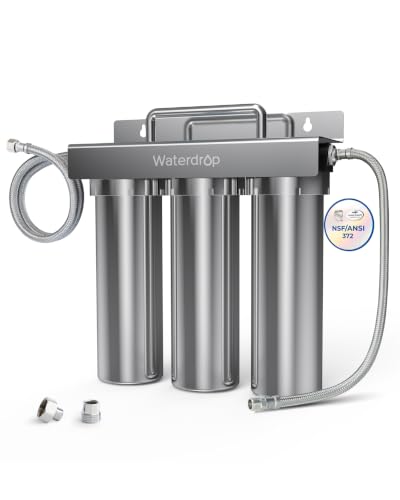
The TST-UF swaps the usual plastic housing for a stainless steel body, which addresses one of the more common long-term complaints about under-sink filters: brittle plastic cracking after years in a damp cabinet. It uses the same 0.01-micron ultrafiltration membrane as the TSU reviewed earlier, but with the no-drill quick-connect fitting that screws onto most existing faucets.
It also targets chlorine, bad taste, and odor through multi-stage filtration, with a manufacturer-stated 99% reduction claim for listed substances. The trade-off is the same as every other ultrafiltration entry in this list: no TDS reduction, no hot-water compatibility, and a no-go on well water without a pre-filter. For renters worried about plastic housing longevity, the steel body is the differentiator.
Features That Help
- ✓Stainless steel housing resists corrosion and cracking over years of damp-cabinet exposure.
- ✓No-drill install connects to most standard cold-water faucets.
- ✓Retains beneficial minerals while removing chlorine and sediment.
Small Caveats
- •Steel body adds weight, so cabinet mounting may need extra care.
- •Same hot-water and well-water limitations as other ultrafiltration units.
Quick Facts
| | Feature | Specification | Why It Matters |
|---|
| Membrane Rating | 0.01μm ultrafiltration | Blocks bacteria and sediment while preserving minerals. |
| Housing Material | Stainless steel | Improves long-term durability in humid under-sink environments. |
| Installation | No-drill quick-connect | Tool-light install works for renters and first-timers. |
Who Should Grab It
Renters and longevity-focused shoppers who want ultrafiltration in a tougher housing than typical plastic cartridges.
Reach For A Different Pick When
Alkaline pH and TDS reduction matter more than housing material, in which case the G5P500A below fits the bill.
Check Latest Price
The G5P500A is the smaller sibling of the G5P700A reviewed above, and the numbers tell the story. At 500 GPD, it produces enough water for a couple or small family rather than a busy multi-person household. You still get the same 8-stage RO filtration with added minerals, the same NSF/ANSI 58 and 372 certifications, and the same tankless 2:1 pure-to-drain efficiency.
Where this unit differs is right-sizing. If your household runs two people drinking filtered water through the day and you cook most nights, 500 GPD is honest capacity without overspec. Step up to the 700 GPD only when you actually need the extra flow for fridge lines or constant entertaining.
What Stands Out
- ✓500 GPD flow rate is well matched to couples and small families.
- ✓NSF/ANSI 58 and 372 certifications apply to this model as well.
- ✓2:1 pure-to-drain ratio matches the larger G5P units.
- ✓Reduces TDS while still adding back beneficial minerals.
A Few Limitations
- •Lower flow rate can feel constrained during simultaneous cooking and drinking.
- •Still requires a faucet hole and power outlet under the sink.
Made For
Couples or small families who want tankless alkaline RO but don’t need the higher output of the 700 GPD model.
Where Another Pick Suits Better
Larger households with frequent cooking and entertaining will appreciate the extra headroom of the Waterdrop G5P700A.
View on Amazon
The VIOMI Master M1 is the most output-heavy option in this list, pushing 1000 GPD through an alkaline mineralizing RO system. That kind of throughput matters in two scenarios: households running fridge lines, dishwashers, and ice makers off one source, and homes where multiple people drink and cook with filtered water throughout the day.
Install requirements are real, though. The system needs a standard electrical outlet plus two drilled holes, one for the dedicated faucet and one for the wastewater drain. For households already set up for an RO system, that’s routine. For renters or first-time installers, it’s a step beyond what the Waterdrop ultrafiltration picks above require.
Notable Upsides
- ✓1000 GPD handles heavy daily demand without flow delays.
- ✓Alkaline mineralizing stage pushes pH up while filtering contaminants.
- ✓Compatible with refrigerator and ice-maker connections through standard tubing.
- ✓Tankless design keeps the under-sink area clear.
Worth Bearing In Mind
- •Two drilled holes plus an outlet make it the most install-intensive pick in this list.
- •Higher output capacity is wasted in smaller households with light demand.
Best Suited To
Busy households feeding multiple appliances from one filtered source, who want 1000 GPD headroom and alkaline pH.
Swap It Out When
You have a smaller household, in which case the Waterdrop G5P500A’s 500 GPD is plenty and easier to install.
Check on Amazon
The VIVA21 6-stage system rounds out the list with a straightforward alkaline RO setup focused on the basics. Six stages covers sediment and carbon pre-filtration, the RO membrane, a post-carbon polish, and the alkaline remineralization stage that raises pH and adds back minerals. The manufacturer cites reductions for PFAS, chlorine, fluoride, lead, arsenic, and asbestos among other contaminants.
Where this pick differs from the Waterdrop G5 series is in scope. There’s no smart faucet, no app connectivity, and no flow-rate headline. For shoppers who want alkaline RO without paying for connected features, that simplicity is the point. The trade-off is less polished branding and a narrower feature ecosystem around replacement filters.
Points In Its Favor
- ✓6-stage RO with an alkaline stage keeps the configuration easy to understand.
- ✓Cites reductions across PFAS, lead, arsenic, and other priority contaminants.
- ✓Simpler feature set translates into fewer components to troubleshoot.
Practical Considerations
- •Smaller brand ecosystem means fewer third-party filter sources than Waterdrop’s lineup.
- •No smart faucet or app feedback, so filter status is tracked manually.
Right Fit For
Set-and-forget households who want alkaline RO with broad contaminant claims, and don’t care about connected features.
Where Another Pick Suits Better
Shoppers who want a smart LED faucet and faster flow rate will find more polish in the Waterdrop G5P700A.
View Latest Price
Choosing the Right Under-Sink RO Setup for Your Kitchen
Picking among alkaline water filtration systems comes down to three honest decisions. The first is whether you need reverse osmosis at all, or whether ultrafiltration covers your concerns. RO strips dissolved solids and heavy contaminants through a semi-permeable membrane but wastes water and needs a drain line. Ultrafiltration blocks bacteria and sediment while leaving minerals in place, with no wastewater and simpler plumbing. People chasing PFAS, fluoride, or lead reduction lean toward RO. People focused on chlorine taste, odor, and sediment tend to be happy with ultrafiltration.
The second decision is daily capacity. Pick a GPD rating that matches your household’s real consumption. A couple drinking and cooking filtered water daily will find 500 GPD adequate. Larger families or homes feeding fridge lines and ice makers need 700 to 1000 GPD to avoid flow delays. Undersizing causes frustration; oversizing wastes money on capacity you’ll never use.
The third decision is installation tolerance. The simplest units connect to an existing faucet thread and need no electricity. Mid-tier RO systems add a faucet hole and a power outlet. The most capable picks, like the VIOMI Master M1, add a second drilled hole plus drain routing. Honest upfront assessment of cabinet space, electrical access, and drilling comfort saves a Saturday of plumbing regret.
Common Buying Traps and Where the Extra Money Goes
Pitfalls Shoppers Hit
Most regret in this category traces back to misjudging two things. First, treating “alkaline” as the primary filter rather than a finishing stage. The alkaline stage handles pH and mineral balance, but the contamination work happens in earlier stages. Second, ignoring installation scope. A system that needs an outlet, two drilled holes, and a drain line is a different project than a no-drill twist-on filter. Measure cabinet depth, check for an outlet, and confirm a drain line is reachable before adding to cart.
Where the Extra Money Goes
Higher-tier models earn their cost through three upgrades: faster GPD flow, better waste ratios, and smart features like LED filter indicators. A 1000 GPD unit over a 500 GPD unit matters most in households running multiple filtered taps simultaneously. Better waste ratios (2:1 versus older 1:4 designs) save real water over years of ownership. Smart faucets and NSF certifications add verification rather than raw capacity, which is worth it for shoppers who want independent confirmation of the manufacturer’s claims.
Frequently Asked Questions
QHow does an alkaline water filtration system actually raise pH?
It passes water through a remineralization stage after the main filtration, which introduces dissolved minerals that shift the pH upward toward the alkaline range of the scale.
QDo these systems waste a lot of water?
Modern RO units like the G5P series run a 2:1 pure-to-drain ratio, while ultrafiltration systems like the TSU and TSA produce no wastewater at all.
QCan I install one of these without drilling a hole?
Yes, the Waterdrop TSA and TST-UF connect directly to most existing faucets, while the dedicated-faucet picks require a drilled hole.
QWill an alkaline system remove fluoride and lead?
Reverse osmosis systems with NSF/ANSI 58 certification target those contaminants through the RO membrane, while ultrafiltration units do not reduce them.
QHow often do filters need changing?
Most cartridges in this list run on roughly a 6 to 12 month cycle depending on household usage and incoming water quality, though owners commonly report shortened life in hard-water areas.
Closing Remarks
The right alkaline water filtration system is the one that fits your kitchen and your expectations. Match the filtration type to your contaminant concerns, match the GPD to your household size, and match the install complexity to your comfort with basic plumbing. Take that path and the daily glass of water becomes the easy part.