

A treadmill on bare hardwood is a slow-motion disaster waiting to happen. Sweat puddles, dropped dumbbells, and vibrating cardio machines punish ordinary floors, which is why picking the right gym flooring matters before you set anything up. Whether you’re carving out a corner for yoga or converting a whole garage into a lifting zone, the surface underneath your feet shapes every workout.
The nine picks below cover the main flooring styles worth knowing: protective bike mats, rolled exercise mats, folding mats, and interlocking foam tiles. Each suits a different setup, equipment mix, and budget, so you can match your space to the right material without second-guessing the choice.
The Picks In Brief
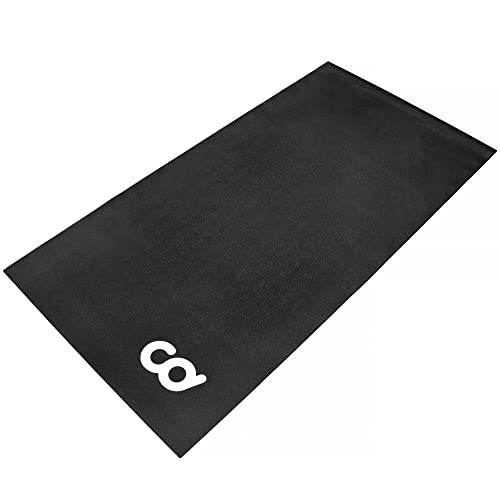
CyclingDeal Bike Trainer Floor Mat 30″ x 60″

Gorilla Mats Large Exercise Mat (1/4″ Thick)

ProsourceFit Tri-Fold Folding Exercise Mat 6’x2′

GXMMAT Extra Large Exercise Mat (7mm)

ProsourceFit Puzzle Mat ¾-inch Grey 96 sq ft

ProsourceFit Puzzle Mat 1-inch Black 72 sq ft

ProsourceFit Puzzle Mat 1-inch Black 24 sq ft
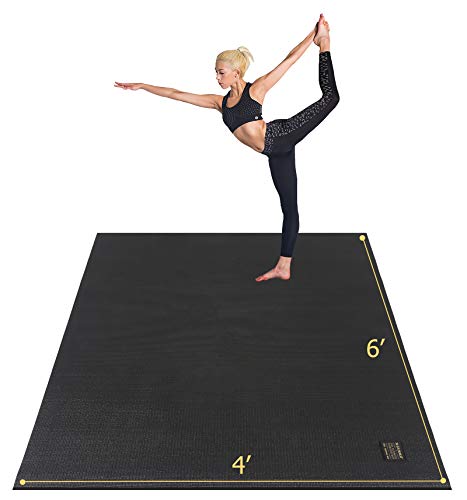
GXMMAT Large Yoga Mat 6’x4’/6’x6’/7’x5′
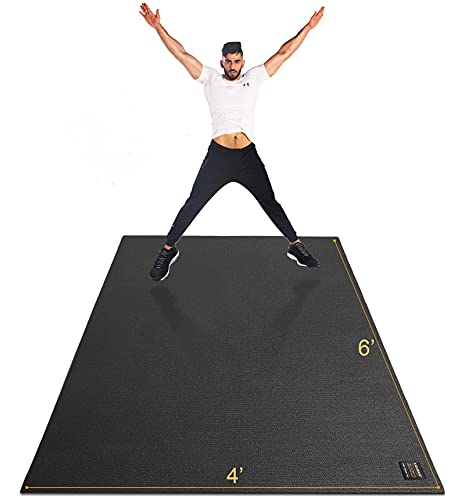
GXMMAT Large Exercise Mat 6’x4’/6’x5’/6’x6′
Inside Each Recommended Option
Stationary bikes and treadmills generate relentless vibration, and the CyclingDeal trainer mat exists to soak that up before it travels through the floor. At 30″ x 60″ with 7mm of soft PVC, it’s the kind of slim, dense mat that lives quietly under a heavy spin bike or a rower without adding visible bulk to the room.
Compared to the rolled exercise mats later in this list, this one prioritizes equipment protection over workout surface. It works for anyone setting up a single cardio machine in a carpeted spare bedroom or a living room corner, where sweat and vibration are the real concerns. Owners commonly appreciate that the soft PVC feels quiet underfoot during early-morning rides.
What Pays Off
- 7mm soft PVC dampens vibration from heavy spin bikes and treadmills so neighbors below stay happier in apartment buildings.
- Waterproof surface catches sweat drips and stray water bottles, which keeps carpet or hardwood from staining.
- 30″ x 60″ footprint fits neatly under most standard stationary bikes without crowding the surrounding floor.
- Low profile means the bike sits flat and stable rather than wobbling on a thick pad.
Things To Consider
- Soft PVC can hold indentations under very heavy, stationary equipment over long periods.
- The size is built for one machine, so full-room coverage requires a different pick.
Key Specs
Right Fit For
Anyone with one cardio machine, especially a heavy spin bike, on carpet or hardwood who wants quiet, stable equipment protection.
Where Another Pick Suits Better
If your goal is a full-room cushioned floor for bodyweight work, the Gorilla Mats Large Exercise Mat gives you much more surface to stretch out on.
Where the CyclingDeal mat focuses on equipment pads, the Gorilla Mats rolled exercise mat covers ground for actual training. With an 18oz vinyl surface wrapped around a dense crosslink foam core and 1/4″ of thickness, this is the mat you’d pick for crunches, planks, and stretches in a dedicated room.
It comes in sizes up to 10’x4′, so you can unroll enough surface for a yoga flow without drifting off the edge mid-pose. Lifting enthusiasts get a stable, flat floor for sit-ups and dumbbell work, while beginners get a forgiving cushion that forgives kneeling mistakes. Compared to the GXMMAT rolled options ahead, this one leans toward heavier-duty vinyl construction.
Key Advantages
- 18oz vinyl top resists scuffs from shoes, sliders, and light dumbbell contact.
- 1/4″ foam core cushions knees and elbows during long stretching routines.
- Multiple size options from 6’x4′ up to 10’x4′ let you scale to your room.
- Flat, non-slip surface stays put on hardwood and low-pile carpet alike.
Honest Caveats
- Larger sizes ship rolled and can take time to flatten fully before first use.
- The vinyl top is wipe-clean only, so you can’t toss it in a washing machine.
Who It Suits Best
Anyone building a multi-purpose home gym room who needs a flat workout surface under a bench, dumbbells, and a yoga block setup.
Consider Something Else When
For pure yoga and stretching in tight spaces, the GXMMAT Large Yoga Mat is a more flexible, lighter alternative.
Not every home gym stays in one place, and that’s where folding mats earn their keep. The ProsourceFit tri-fold opens into a 6’x2′ padded platform and folds into a compact bundle with built-in carrying handles, so it’s easy to drag out for a session and tuck behind the couch afterward.
Core work, MMA drills, gymnastics stretching, and beginner plyometrics all fit comfortably on this format. Unlike the rolled Gorilla Mats pick above, this one stores vertically or in a closet without ever needing to flatten out. It’s a smart match for renters, apartment dwellers, and anyone working out in a shared room.
Where It Excels
- Tri-fold design folds into a compact shape for closet or under-bed storage.
- Two carrying handles make it easy to grab and move between rooms.
- Thick padding absorbs kneeling impact during core work and stretching.
- 6’x2′ opened size accommodates most adult body lengths for floor work.
Trade Offs
- The 6’x2′ shape is narrow, so wide-stance exercises can drift off the edge.
- Folding means seams, which may bother some users during floor-based rolling movements.
Quick Facts
Made For
Anyone without a permanent gym room who needs a cushioned mat that disappears into a closet between sessions.
A Better Fit Elsewhere
For a permanent, larger floor surface, the Gorilla Mats Large Exercise Mat gives you more usable square footage without folding seams.
Some workouts demand space to actually move. The GXMMAT extra-large mat comes in sizes up to 16’x6′, turning a section of your room into a true training surface for aerobics, HIIT, and stretching sequences. The 7mm thickness lands in the sweet spot for joint comfort without feeling spongy under footwork drills.
It works well as the main floor of a converted bedroom gym, especially for parents exercising alongside kids. Compared to the 1/4″ Gorilla Mats pick earlier, this one offers more length and width for dynamic routines. You may find the larger sizes require two people to unroll cleanly the first time.
A Favorable Mix
- Up to 16’x6′ surface lets you move freely without stepping off mid-burpee.
- 7mm thickness cushions knees and wrists during plank and lunge work.
- Sticky non-slip texture grips the floor and your hands, reducing slips during quick direction changes.
- Single-piece construction means no seams interrupting push-ups or stretches.
Points To Note
- Extra-large sizes are heavy and awkward to reposition once unrolled.
- Larger formats need significant storage space if rolled up between sessions.
Best Suited To
Homeowners dedicating a full room to aerobic training, family workouts, or yoga flows where you want full freedom of movement.
Look Elsewhere When
If your space is tight or you prefer tile-style modularity, the ProsourceFit Puzzle Mat 1-inch Black 72 sq ft offers more flexible coverage.
Interlocking foam tiles turn any room into a finished gym floor without calling a contractor. This ProsourceFit set ships 24 tiles covering 96 square feet at ¾-inch thickness, which is enough to floor most garage conversions or spare bedrooms. EVA foam (a dense, rubbery closed-cell plastic) gives the surface bounce without feeling squishy.
Compared to the rolled GXMMAT earlier, this format lets you replace a single damaged tile rather than the whole mat. You may find the puzzle seams collect dust over time, so occasional vacuuming keeps things tidy. For anyone renovating a gym area on a budget, this is a solid middle ground.
Bright Spots
- 96 square feet covers a full garage wall-to-wall training area.
- Interlocking edges let you customize the layout around equipment or odd corners.
- ¾-inch thickness absorbs impact from dropped dumbbells and kettlebells reasonably well.
- Modular tiles can be lifted and relocated if you rearrange the room later.
Worth Noting
- Puzzle seams can loosen slightly over months of heavy foot traffic in doorways.
- Light grey color may show scuffs more than darker tile options.
Feature Snapshot
Perfect Match For
Anyone converting a garage or basement into a permanent home gym who wants a customizable, replaceable tile floor.
Swap It Out When
If you drop heavy weights frequently, the thicker 1-inch ProsourceFit Puzzle Mat Black 72 sq ft offers more impact absorption.
When dumbbells start getting heavy, thinner mats start to feel inadequate. This ProsourceFit set goes to a full 1-inch thickness in 18 tiles covering 72 square feet, giving serious lifters a drop-zone cushion that protects both the floor and the equipment. The black color hides scuffs and chalk dust better than lighter shades.
You trade a little firmness for noticeable impact absorption, which matters when barbells and kettlebells leave your hands unexpectedly. Compared to the ¾-inch grey set above, this one focuses more on cushioning than raw coverage. Depending on your routine, the thicker tiles can feel slightly less stable under static lifts.
The Case For It
- 1-inch EVA foam takes the sting out of repeated barbell drops.
- Black weaved pattern hides chalk, scuff marks, and dust between cleanings.
- Modular layout means individual tiles are easy to flip or replace after heavy use.
- Works as protective flooring under benches, racks, and cable machines.
Some Limits To Know
- Thicker tiles can compress slightly under very heavy, stationary racks over time.
- 72 sq ft is less coverage than the grey 96 sq ft set at ¾-inch.
Who Will Love This
Strength-focused lifters doing barbell work, Olympic-style movements, or heavy dumbbell training in a garage gym.
Reach For A Different Pick When
If you mostly do yoga, stretching, or bodyweight circuits, the GXMMAT Large Yoga Mat gives you a smoother, less bulky surface.
You don’t always need to floor a whole room. This compact 6-tile set covers 24 square feet at 1-inch thickness, which is enough to build a small deadlift platform, cushion under a bench press, or define a dedicated lifting zone in a corner. It’s the same 1-inch cushion as the larger black set, just in a starter footprint.
Beginners testing the modular format before committing to full coverage often start here. Compared to the 72 sq ft set reviewed earlier, this one is easier to handle and store if you decide to expand later. It feels less like a permanent renovation and more like a flexible piece of equipment.
Where It Helps
- 1-inch foam absorbs impact from heavy dumbbells and barbells in a small zone.
- Six tiles are easy to lay down, lift, and reconfigure as your setup evolves.
- Black weaved finish pairs visually with the larger ProsourceFit sets if you expand later.
- Compact footprint works under a single piece of equipment without dominating the room.
Factors To Consider
- 24 sq ft covers a small area, so full-room protection requires buying multiple sets.
- Heavy static racks may eventually leave impressions in the foam core.
Built With In Mind
Anyone building a starter home gym in a corner, under a single bench, or around a deadlift station who wants to test modular flooring first.
Another Choice May Suit
If your priority is full-room coverage from day one, the ProsourceFit Puzzle Mat 96 sq ft gives you a finished floor in one purchase.
Yoga and mobility work punish thin, slippery mats. The GXMMAT large yoga mat comes in 7mm and 9mm thicknesses, with widths up to 6 feet, so a downward dog finally has room to breathe. The textured, sticky surface keeps hands and feet planted without sliding through a flow.
It’s a smart choice for anyone whose home gym leans toward stretching, Pilates, and bodyweight mobility rather than heavy lifting. Unlike the puzzle tile sets above, this one rolls up neatly between sessions. You may find the largest 7’x5′ option harder to roll tightly for travel compared to a standard mat.
Reasons It Performs
- Non-slip texture grips hands, feet, and the floor during active poses.
- Up to 9mm thickness cushions knees and elbows in kneeling poses.
- Width options up to 6 feet stop your hands from drifting off the edge during wide-stance flows.
- Rolls up for easy storage when the room serves multiple purposes.
Possible Compromises
- Thicker mats can feel slightly less stable for balance-focused standing poses.
- Not designed to absorb dropped weights, so a separate lifting zone is still needed.
At A Glance
Who Should Grab It
Yoga practitioners, mobility-focused trainees, and anyone wanting a soft, grippy surface for floor-based bodyweight work.
Where A Sibling Pick Shines
For full-room aerobic workouts requiring more length, the GXMMAT Extra Large Exercise Mat stretches much further in one piece.
Sometimes the right answer is the middle one. The GXMMAT large exercise mat at 7mm depth covers sizes from 6’x4′ up to 6’x6′, giving mid-sized rooms enough surface for cardio, stretching, and circuit work without committing to a room-filling extra-large mat. It bridges the gap between the bike trainer pad and the giant yoga mat.
It’s well suited to mixed routines where you switch between standing cardio bursts and floor-based core work. Compared to the GXMMAT yoga mat above, this one uses the same thickness but prioritizes aerobic versatility over stickiness for poses. Depending on your height and movement style, the 6’x5′ size tends to fit the broadest range of users.
Points In Its Favor
- Three size options (6’x4′, 6’x5′, 6’x6′) accommodate different room layouts and user heights.
- 7mm thickness supports both kneeling and standing exercises comfortably.
- Non-slip surface keeps the mat in place on hardwood and tile.
- Mid-range footprint rolls up more easily than extra-large mats for storage.
Worth Bearing In Mind
- Not as grippy as the dedicated GXMMAT yoga mat for advanced pose work.
- Single-piece foam is thinner than the 1-inch puzzle tiles, so heavy drops still transfer through.
The Right Fit
Mixed-fitness households doing cardio circuits, core work, and light stretching in a medium-sized spare room.
Not Your Match When
Serious lifters dropping barbells regularly should pair this mat with the ProsourceFit Puzzle Mat 1-inch Black 72 sq ft for drop-zone protection.
Matching Your Floors To Your Workout Style
Picking the right gym flooring starts with honest answers about what your space will actually do. A mat that handles yoga flows can feel dangerously thin under a barbell, and a thick lifting tile is overkill for someone stretching in a living room corner. Matching the floor to your dominant activity prevents wasted money and bruised joints.
Thickness matters more than you think. Foam and PVC thickness translates directly to joint cushioning and impact absorption. Anything under 6mm feels fine for seated stretching but punishes knees during planks. Home gym flooring in the 7mm to 10mm range covers most cardio and bodyweight routines, while dedicated lifters want ¾-inch to 1-inch tiles to absorb dumbbell drops.
Size dictates versatility. Small trainer mats work for one machine but limit bodyweight movement. Large rolled mats (6’x4′ and up) handle full exercise routines. Puzzle tiles let you expand coverage room by room, which suits permanent installations.
Material affects feel and care. EVA foam tiles are lightweight and replaceable but can show wear at seams. PVC mats wipe clean easily but may off-gas initially. Vinyl-topped foam rolls offer durability for weight rooms but require spot cleaning.
Key Considerations Across These Picks
Pitfalls Shoppers Hit
Buying too little coverage is the most common mistake. People measure for the bike footprint and forget they need room to step off, stretch, and cool down. Always order slightly more square footage than your equipment base requires.
Ignoring the subfloor is another trap. Foam tiles over uneven concrete can shift and separate at the seams. A quick sweep and level check before installation prevents months of edge curling and popped puzzle joints.
Where The Extra Money Goes
Higher-tier gym flooring usually means thicker foam, denser vinyl, and better edge construction. Thicker material costs more to manufacture but lasts longer under heavy equipment and repeated impact. Spending up makes sense when you train daily, lift heavy, or expect your home gym to last several years without replacement.
Frequently Asked Questions
How thick should home gym flooring be?
For general cardio and bodyweight work, 7mm to 10mm is a comfortable range. Heavy lifting with barbells or dumbbells benefits from ¾-inch to 1-inch foam tiles for impact absorption. Thinner mats work for yoga and stretching but offer limited protection under equipment.
Can I use exercise mats over carpet?
Yes, most foam tiles and PVC mats sit fine over low-pile carpet. High-pile carpet can cause puzzle tiles to separate at the seams, so a firmer subfloor or low-pile rug underneath helps stability.
Are interlocking foam tiles safe for heavy weights?
EVA foam tiles in ¾-inch or 1-inch thickness handle dropped dumbbells and moderate barbell work reasonably well. For Olympic-style lifts with frequent heavy drops, rubber flooring is more durable long-term.
How do I clean foam gym flooring?
Regular vacuuming removes dust and chalk from tile seams. Wipe vinyl or PVC surfaces with a damp cloth and mild soap. Avoid soaking EVA foam, since water can seep into the core and cause odor or mildew over time.
Do gym mats damage hardwood floors?
Most foam and PVC mats are safe for finished hardwood. Some rubber-backed mats can leave discoloration over long periods, so placing a breathable rug pad or mat underneath protects the finish.
Closing Remarks
The best gym flooring is the one that matches your equipment, your routine, and the room you actually have. Measure your space, decide whether you need vibration control, full-room coverage, or a portable mat, and pick the option that fits that reality. A thoughtful surface underneath your feet makes every workout safer, quieter, and more enjoyable.




